Your Fuel Needs as a Dancer
Compared to the general population, dancers face up to a three times higher risk of developing disordered eating behaviors. Restrictive “clean eating” plans, diet culture messaging, and widespread nutrition misinformation often interfere with a dancer’s ability to fuel effectively for performance.
In an effort to eat “right,” many dancers unintentionally eat too little. This under fueling compromises energy, focus, recovery, and long term health.
Proper nutrition for dancers is not about perfection. It is about adequacy, consistency, and sustainability.
What Should Dancers Eat?
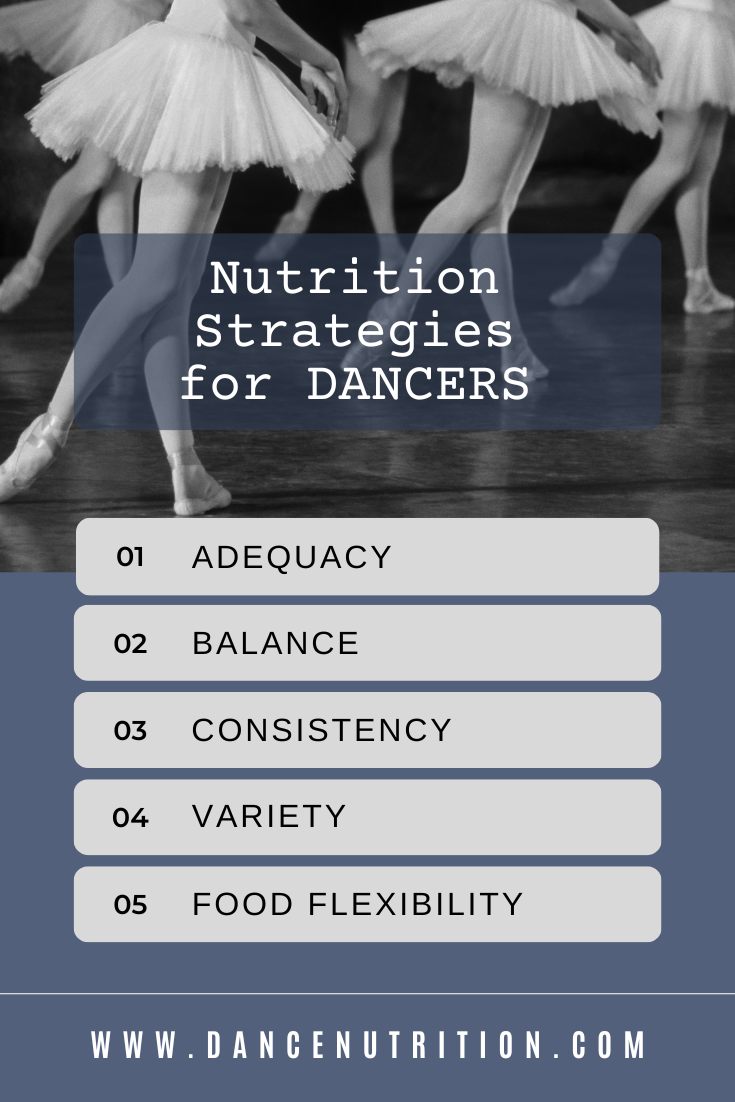
There is no single meal plan that works for every dancer. However, there are five foundational principles that support performance, recovery, and a healthy relationship with food.
These five principles form The Healthy Dancer® Functional Fuel framework, a guided and practical approach to dancer nutrition.
The five fundamentals of dancer nutrition:
- Nutritional adequacy (are you eating enough?)
- Macronutrient balance
- Mealtime consistency
- Food variety
- Food flexibility
Start with The Healthy Dancer® Functional Fuel
#1: Nutritional Adequacy
Understanding your fuel needs as a dancer begins with one essential question: are you eating enough?
Many dancers believe calorie counting, portion control, or rigid food rules are the solution. In reality, these behaviors often reinforce restriction and disconnect dancers from internal body cues.
Nutritional adequacy requires unlearning common food and body beliefs that persist in dance culture. This includes fear around calories, carbohydrates, fat, and foods labeled as “unhealthy.” These behaviors perpetuate restrictive eating and drive dancers further from their abilities to truly harness body attunement.
To begin challenging these beliefs, explore:
Adequate fueling enables dancers to achieve strength, stamina, and consistency in their training.
#2: Macronutrient Balance
Dancers thrive on meals and snacks that include carbohydrates, protein, and fat, along with essential vitamins and minerals. Each meal or snack should aim to include all three macronutrients consisting of at least 55–60% carbohydrate, 15% protein, and 30% fat.
Carbohydrates
Carbohydrates are the body’s preferred energy source and are essential for fueling muscles and the brain. Most dancers benefit from carbohydrates, making up 55 to 60 percent of total intake, particularly during intense training periods. Learn more about carbohydrates here.
Carbohydrate-rich foods, such as whole grains, legumes, fruits, vegetables, nuts, and seeds, also provide fiber, which supports sustained energy and digestive health. Here’s an article that uncovers the role of fiber in a dancer’s diet.
Protein
Protein supports muscle repair and adaptation following training. Protein-rich foods include dairy and dairy alternatives, eggs, legumes, beans, quinoa, and other pseudocereals.
A dancer’s amino acid needs vary based on training demands, growth stage, and recovery needs. Working with a Registered Dietitian Nutritionist can help personalize protein intake. Learn more in Protein Needs for Dancers.
Fat
Dietary fat supports hormone health, bone health, and vitamin absorption. It also improves meal satisfaction and helps regulate inflammation.
Foods like avocados, nuts, seeds, oils, whole milk dairy, eggs, butter, cheese, and meat all play a role. Omega 3 rich foods like flax, chia, walnuts, leafy greens, and fortified eggs are especially supportive and budget friendly.
Fat is not something dancers need to fear. Learn more in Fat Myths and Facts for Dancers.
#3: Mealtime Consistency
Dancers benefit from fueling regularly throughout the day. A helpful starting structure includes:
- 3 meals
- 2 to 3 snacks
Aim to avoid going longer than 3 to 4 hours without eating. During long rehearsal days, hunger cues may fade, making a flexible, yet proactive, fueling approach especially important.
If hunger feels unreliable, mapping out a flexible eating rhythm can help maintain energy. Learn more in Fueling When Hunger Cues Are Low.
#4: Food Variety
Eating a wide variety of foods allows dancers to access a broader range of nutrients over time. Dietary patterns over time matter, but as discussed in this article, the three most common barriers to variety include time constraints, budget concerns, and restrictive eating patterns. Instead of adopting a “now or never” mindset, focus on inclusion over elimination.
Simple ways to add variety:
- Add a handful of whole-grain cereal or pretzels to a trail mix.
- Build grain bowls with quinoa or wild rice, vegetables, protein, and dressing.
- Top yogurt with nuts, flax, and chia.
- Spread avocado on whole grain toast and add egg slices
Small changes add up!
#5: Food Flexibility
A sustainable dancer fuel plan must allow for flexibility.
Supportive nutrition includes nutrient dense foods while also making room for enjoyment, fun foods, and social eating. Rigid food rules often increase guilt, fear, and preoccupation with food.
Granting yourself full permission to eat all foods is the goal, and being flexible is critical if you’re on-the-go and traveling for performances or competitions. Learn more about a food flexible mindset here.
Common Nutrition Mistakes That Hurt Dancer Performance
#1: Foods To Avoid?
Misinformation in the dance world often promotes lists of foods dancers “should” or “should not” eat. Restriction, whether by quantity or food type, increases guilt and reduces energy availability. Low-calorie dieting can lead to deficiencies in calcium, vitamin D, B12, iron, zinc, and vitamin K.
Unless a medically diagnosed allergy exists, food avoidance is rarely necessary.
Learn how to separate food preferences from food rules in Food Preferences vs Food Rules. Food is culture, connection, enjoyment, and nourishment. The more we restrict our favorite foods, the more inclined we are to enter a binge-and-restrict cycle. Also, be wary of “light” alternatives, as these may leave you unsatisfied. Cauliflower pizza is trendy, but if you’re truly craving pizza, enjoy it. You’ll feel more satisfied in the long run. Removing moral value from food choices is an important step. Learn how in Food Neutrality for Dancers.
2: Calorie Deficits?
A calorie deficit occurs when intake fails to meet both training demands and basic metabolic needs.
Prolonged under-fueling increases the risk of Relative Energy Deficiency in Sport (RED S), a condition that negatively impacts bone health, hormonal function, strength, and emotional health. Recognize that as a dancer, your energy needs include calories burned during your activity and the calories required for basic metabolic functioning.
Dancers: Access Nutrition Advice from Qualified Sources
Not all nutrition advice is created equal. Anyone can consider themselves an “expert” in nutrition. However, not all “experts” are licensed to provide adequate nutrition information.
Registered Dietitian Nutritionists are uniquely trained to provide evidence-based, individualized nutrition care. RDNs complete extensive education in medical nutrition therapy, research, and clinical practice, and must maintain licensure through continuing education.
Since nutrition is an evolving science, this continued education ensures that dietitians remain up-to-date on nutrition research. Such training sets dietitians apart from nutritionists and health coaches. Be cautious of advice that emphasizes calorie tracking, macro counting, or rigid food logs. These approaches can increase food fixation and disordered eating risk in dancers.
Nutrition for Dancers: Start TODAY
The Healthy Dancer® provides personalized nutrition support that fits your schedule, preferences, and goals.
Together, we build a realistic plan that helps you:
- Improve energy and stamina
- Support digestion and hormone health
- Strengthen body awareness
- Develop a supportive relationship with food
A great starting point is A Dancer’s Complete Guide to Intuitive Eating, which introduces gentle nutrition without obsession.
For dancers ready to deepen their nutrition knowledge, explore Nourish The Healthy Dancer®, a self study course series including:
- Nutrition Without Obsession and Performance Nutrition. Learn more here.
- Reclaim Emotional Eating. Learn more here.
- Build Body Confidence through appreciation, neutrality, and respect Learn more here.
You can also dive deeper into the five fundamentals through The Healthy Dancer® Functional Fuel Challenge, a free annual experience each October.