Feeling “not hungry” might seem far-fetched to those with a larger appetite. But hunger varies substantially from person to person. Missing hunger cues can happen for several reasons, leaving those trying to fuel their body confused and frustrated. If you can relate, let’s discuss why your hunger might be M.I.A. From there, we can pinpoint a cause and work on a solution.
5 reasons why dancers struggle with hunger (and how to fix it)
#1: You’re Busy… Too Busy
Navigating a busy schedule is one of the most common reasons one might miss an opportunity to eat. Whether you’re commuting to classes or balancing your academics and rehearsals, a constrained schedule leaves little room for a snack, at the very least. Preparing emergency snacks is a helpful strategy and can aid in preventing long periods between meals. Going too long without eating can leave you overly hungry later. Read this post for more help on meal planning for your busiest days.
#2: You’re Consistently Dancing on Low Fuel
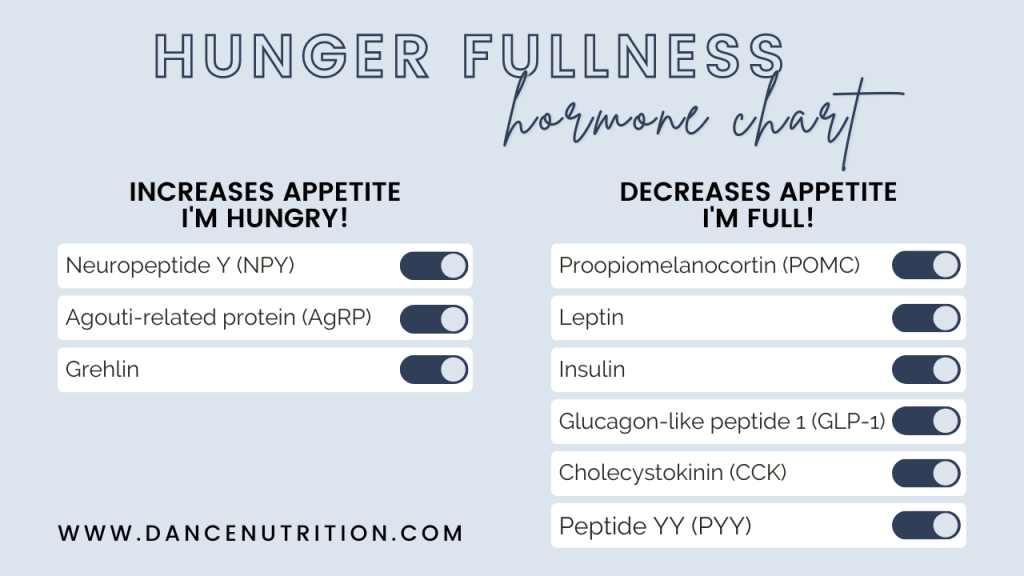
From birth, we’re wired to balance our energy requirements. The body sends signals to your brain like, “Hey Rachel, it’s time to eat!” or “Hold up… I’m full!” Prolonged dieting or the reliance on restrictive food rules can shift these internal cues. The body realizes that despite its need for energy (or calories from food), it knows its needs won’t be met. The result? Suppressed hunger causes us to lose touch with our ability to self-regulate. This often feels like we’re swinging between excessive hunger and feelings of over-fullness without the ability to find a comfortable middle ground between mealtimes. If this feels relatable, check out this post to learn more about regaining your hunger cues.
Learn more about your hunger hormones
#3: You’ve Been Known To Over-Exercise
Similar to a busy schedule, excessive exercise can naturally blunt hunger. To keep up with the increased physical demands of your activity, the body shifts blood away from your digestive tract and towards your working muscles. As a result, food becomes less of a priority and we’re often hit with excessive hunger later in the day.
#4: You’re Satisfied
You’ve heard me say we cannot control an otherwise biologically intuitive process. Eating is a biological response to the body’s need for more energy. This process ebbs and flows. Some days you may feel hungrier and other days you may feel less hungry. Say for example you’re rehearsing more than usual; your hunger might be more intense throughout the days following. The same holds for periods when you’re less active. I encourage you to check in with the hunger scale. We know that extended periods between meals can leave you swinging between excessive hunger and over-fullness. Use your best judgment when eating throughout the day and avoid the extremes that leave you feeling physically uncomfortable and low in energy.
#5: You’re Feeling [insert emotion here]
There’s no doubt that emotions play a role in our food choices. Stress and anxiety can leave you lacking an appetite. These emotions can also leave you wanting to eat despite not feeling physically hungry. Coping with emotions is important as food may not be the answer.