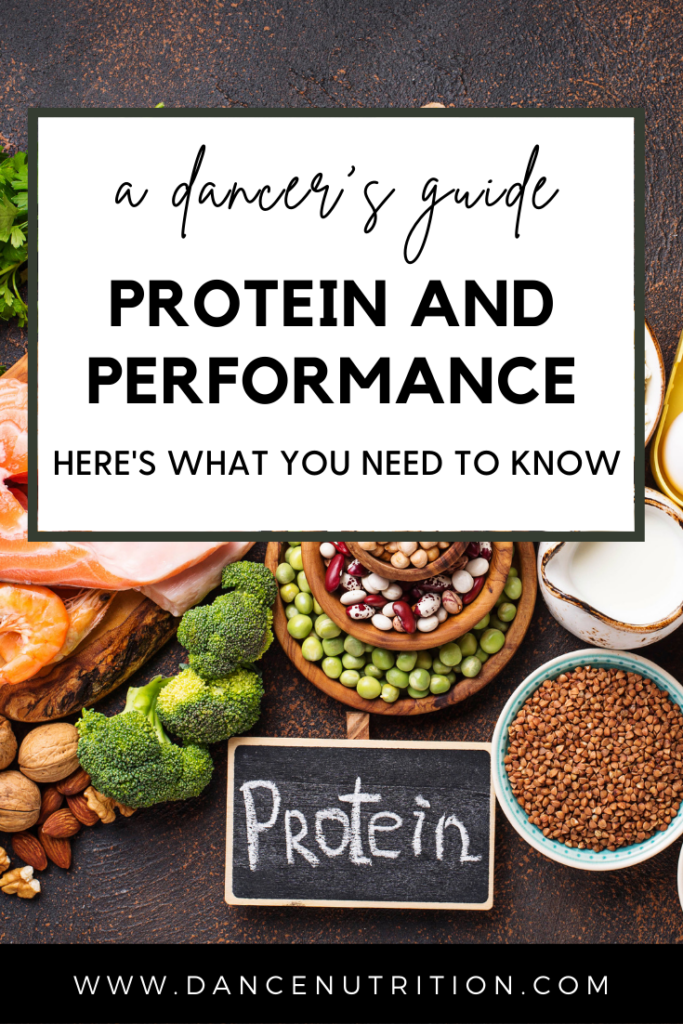
The Bottom Line Up Front
Dancers need slightly more protein than the general population: approximately 1.2–1.7 grams per kilogram of body weight per day, or 12–15% of total caloric intake. But protein doesn’t operate in isolation. It works alongside carbohydrates and fat to fuel performance, repair muscle, and sustain long-term health. Obsessing over protein targets often does more harm than good, especially in a field where disordered eating is already prevalent.
How Much Protein Does a Dancer Actually Need?
Most of what we know about protein requirements comes from sports science research. Dance, despite its extraordinary physical demands, has historically been underrepresented in the literature. That said, the International Association of Dance Medicine and Science has established a working framework: 1.2–1.7 g/kg of body weight per day.
What this range accounts for:
- The intensity and frequency of dance training
- The ongoing demand for muscle repair and recovery
- Individual variability by age, body weight, and training load
But here’s a caveat: Tracking and calculating daily protein intake is not recommended for most dancers. The psychological risk, particularly in a discipline where perfectionism and disordered eating are already elevated, outweighs the marginal benefit for the average dancer. If genuine concerns exist about adequacy, the right move is a consultation with a Registered Dietitian Nutritionist who specializes in performing arts nutrition.
Why Protein Matters: The Full Picture
Protein’s most well-known role is muscle repair, and for dancers subjecting their bodies to hours of high-intensity, technically demanding movement daily, this matters enormously. But its functions extend well beyond the gym floor:
- Structural support: Protein forms the scaffolding of organs, bones, and connective tissue
- Metabolic function: Enzymes that drive nearly every biochemical reaction in the body are proteins
- Immune defense: Antibodies (your body’s frontline defense) are protein-based
- Hormonal regulation: Many hormones critical to bone density and metabolic health are protein-derived
- Satiety: Protein slows gastric emptying, sustaining fullness between meals and rehearsals
Protein matters, but it cannot be evaluated in isolation. Here’s how all three macronutrients function together for a dancer:
- Carbohydrates are your main energy source, especially for dance. Carbs fuel both high-intensity and prolonged physical activity. When your diet includes enough carbohydrates, you maintain adequate glycogen (the storage form of carbs) to dance longer and stronger. Click here to learn more about the important role of carbohydrates in a dancer’s diet.
- Fat is your primary fuel source for low to moderate-intensity dancing (like adagio). Fat keeps your hormones balanced, supports your immune system, makes up the very structure of your body’s cells, and facilitates nerve actions. Click here to learn more about the important role of fat in a dancer’s diet.
The key insight is that when carbohydrate or fat intake is insufficient (often the result of restrictive dieting), the body breaks down stored protein (i.e., muscle tissue) for energy. This means amino acids that should be rebuilding working muscles are redirected to fuel basic metabolic functions. The result is muscle loss, reduced strength, and compromised performance.
Amino Acids: The Building Blocks
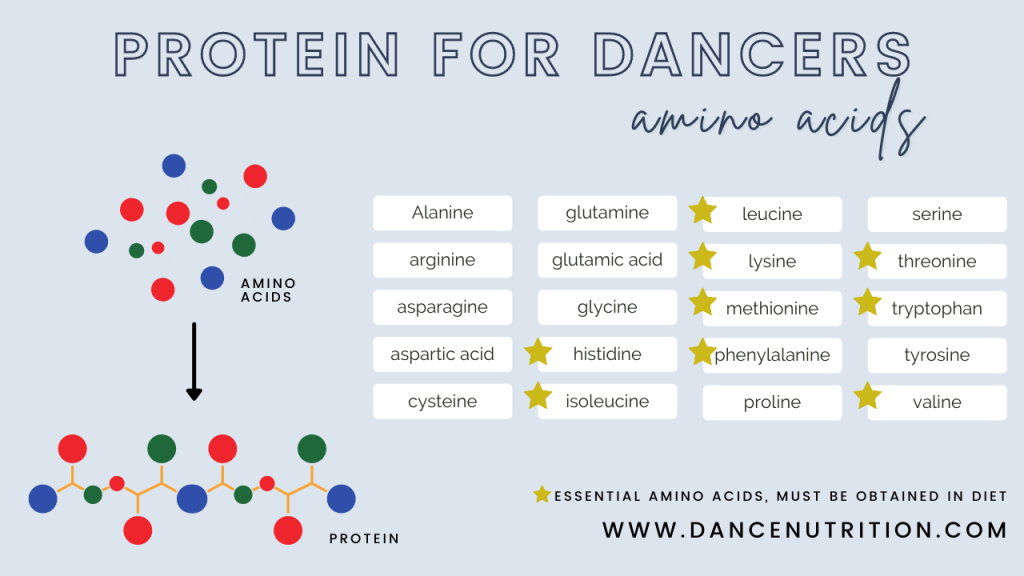
All protein, whether it’s the chicken in your meal or the muscle tissue in your quads, is composed of amino acids. Of the 20 known to the human body, nine are essential: the body cannot synthesize them, so they must come from food.
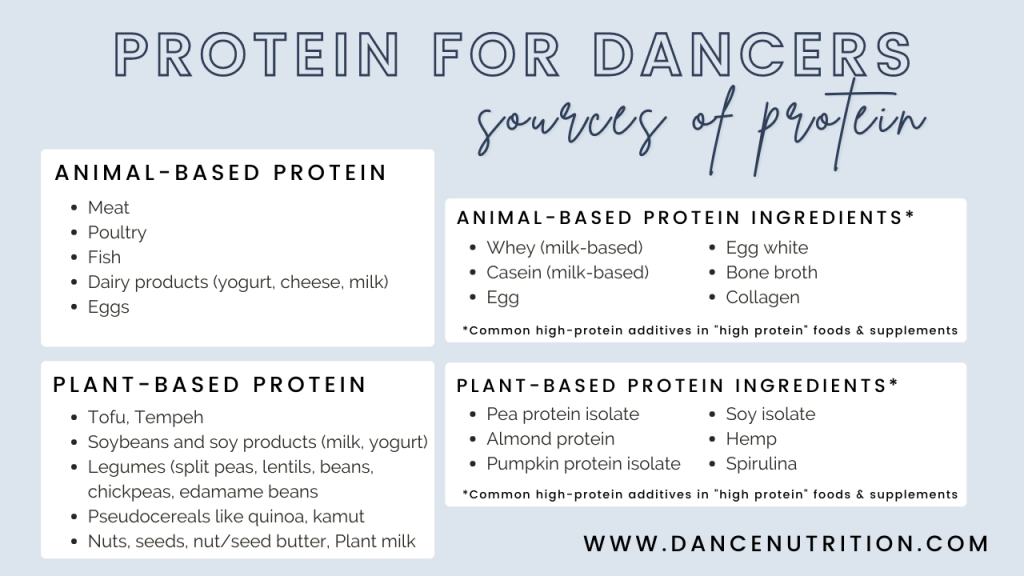
This distinction is what differentiates complete proteins (which contain all nine essential amino acids) from incomplete proteins (which do not). Animal-based proteins like meat, poultry, fish, eggs, and dairy are complete and highly bioavailable. Most plant-based proteins are incomplete individually, but when consumed in combination and variety throughout the day, plant-based dancers can fully meet their essential amino acid requirements.
Protein and Energy
Protein is not a primary energy source —carbohydrates and fats hold that role. However, protein plays an important supporting role in sustained energy:
- As part of a meal or snack, protein slows digestion and delays carbohydrate absorption
- This produces steadier blood glucose levels and more sustained energy versus the sharp spike and drop following a carb-only snack
- Pairing a protein source (e.g., cheese, Greek yogurt, hard-boiled egg) with a carbohydrate source (e.g., crackers, fruit, oats) is a simple, effective strategy for maintaining energy through a long class or rehearsal
Animal vs. Plant Protein: What the Evidence Says
Animal proteins (meat, poultry, fish, eggs, dairy) are higher in biological value, meaning the body uses them more efficiently. This is because they contain all nine essential amino acids in a single source and as a result, make it easier to meet requirements without careful planning
On their own, plant proteins (legumes, grains, nuts, seeds, vegetables) are each incomplete, lacking one or more essential amino acids. When consumed in a variety across the day, however, full amino acid coverage is achievable. Plant-based dancers require slightly higher total intake to match the bioavailability of animal sources. The following sources are particularly valuable:
- Tofu and tempeh
- Soybeans and soy products (milk, yogurt, edamame)
- Legumes: lentils, chickpeas, split peas, black beans
- Pseudocereals: quinoa, kamut
- Nuts, seeds, and nut/seed butters
- Plant-based fortified milks
The practical rule: variety and volume. Aim for multiple plant protein sources throughout each day, not reliance on a single category. To learn more about the nutrition needs of plant-based vegan and vegetarian dancers, click here.
Are You Eating Enough Protein? A Self-Assessment
Due to the pervasive influence of dancer diet culture, protein is frequently over-emphasized while carbohydrates and fats are under-consumed. In practice, many dancers (including vegan dancers) aren’t just meeting their protein needs, they’re surpassing them. Here are a few prompts to consider when assessing whether your daily meal plan is sufficient in protein:
- Do you include a variety of quality protein sources throughout the week? (Fish, eggs, meat, tofu, tempeh, lentils, beans — or, for plant-based dancers, a broad combination of sources)
- Are you eating a balanced meal or snack within one hour of intense dancing?
- Are you fueling every 2–4 hours throughout the day, based on your schedule and training load? Read this article to learn more about how dancers can meal plan in a way that is sustainable.
- Do you have emergency snacks on hand? (Protein bars, trail mix, individually packaged nut butters)
- How often are you relying on protein supplements? Multiple bars or shakes per day often signal you’re exceeding, not meeting, your needs.
Timing Matters: When to Prioritize Protein
The post-performance recovery window is real. Research consistently supports the benefit of protein intake following exercise for stimulating Muscle Protein Synthesis (MPS). Practically speaking:
- If your next full meal is within one hour of dancing, no additional protein supplement is necessary
- If your next meal is more than an hour away, a recovery snack containing both protein and carbohydrates is warranted
- Post-exercise, there is a natural increase in insulin sensitivity — pairing protein with carbohydrates in that window optimizes glycogen replenishment and MPS simultaneously
Overall, the daily pattern matters most. Consistent, well-distributed protein intake across the day (not a single large dose) is what drives long-term muscle repair and recovery.
Can You Eat Too Much Protein?
Like any food or nutrient, it is possible to overdo it. Excessive intakes of high-protein foods can displace opportunities for eating other nourishing foods like veggies, fruits, grains, and sources of heart-healthy fats. High-protein diets might also place stress on the kidneys in those with medical conditions like high blood pressure and diabetes.
It has also been previously hypothesized that high-protein diets may increase the risk of dehydration by increasing urine output. Therefore, it’s often advised that protein supplements be consumed alongside adequate fluids. Though the evidence to date does not support an increased risk of dehydration in otherwise healthy individuals who maintain a normal fluid intake (at least 3 liters for those 14 and older), dancers need to consider their unique circumstances. Similar to athletes, dancers require more fluids to maintain proper hydration. This is especially true when training in hot and humid climates. So, the evidence remains limited and inconclusive in the context of dancer populations. From my clinical experience (which, of course, is not “evidence” but mere anecdotal information to consider)… most often, dancers do not drink enough throughout the day and are already more vulnerable to fluid deficits. Bottom line: are excessive protein intakes worth the risk?
Some dancers fear that an excess of protein will cause “bulking.” But for the body to gain muscle, it requires way more than just protein. Adequate intake of one’s total daily calories and high levels of strength training also play a role. But in general, “bulking” is especially uncommon for younger dancers whose bodies are still using a surplus of energy to support growth in height.
Protein Bars and Supplements: A Practical Guide
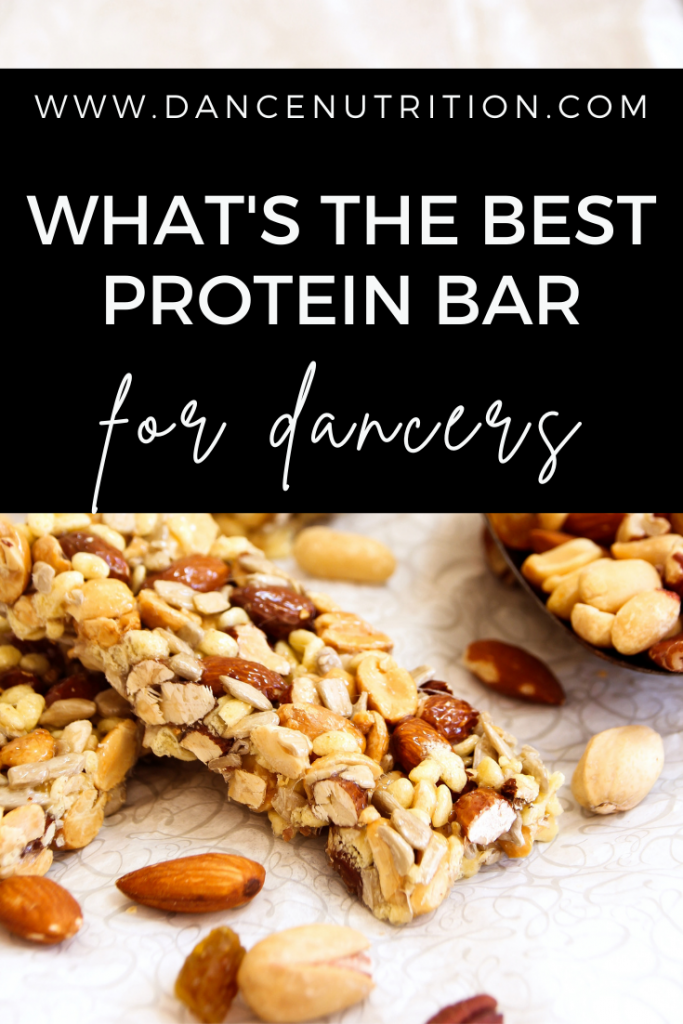
If the time between dancing and your next meal is longer than an hour, a bar can be a convenient snack option to help bridge the gap. Bars can also work well as a pre-dance snack when time, appetite, or access to food is limited.
That said, bars are meant to complement a dancer’s meal plan, not replace balanced meals or become the only snack option. Including one to two bars per day can be a practical and beneficial choice for many dancers. When choosing a bar, consider the following:
- Look for carbohydrate-rich ingredients that support energy needs. Whole food ingredients such as dates, dried fruit, oats, and other grains provide readily available fuel for training and performance.
- Pay attention to the fat sources. Ingredients like nuts, seeds, and nut butters help create a more balanced nutrient profile while contributing essential fatty acids that support overall health.
- Consider the protein content. Many bars contain added protein from ingredients such as whey protein, soy protein isolate, egg protein, pea protein, or brown rice protein. While added protein is not necessary in every bar, it can be a convenient way to support protein intake throughout the day. Protein-containing bars often provide 10 grams or more of protein per serving.
- Be mindful of ingredients that may cause digestive discomfort. Artificial sweeteners, sugar alcohols (such as erythritol, xylitol, and maltitol), and certain added fibers (including inulin and chicory root fiber) can contribute to bloating, gas, or stomach upset, particularly before or during dance classes and rehearsals.
- Don’t be afraid to explore different flavors. Ingredients like cocoa, cinnamon, vanilla, and dried fruit can add variety and make snack choices more enjoyable.
For a deeper dive into choosing the best protein bars for dancers, read this article. And while protein powders can be a convenient option in some situations, they are not a necessity for dancers who are consistently meeting their nutrition needs through meals and snacks. Learn more about protein powder options here.
The Takeaway
Protein is essential. But in the dance world, it is often weaponized by diet culture in ways that distort its actual role. The most effective nutrition strategy for a dancer is not a high-protein diet; it is a balanced, consistent, adequately fueled eating pattern that includes protein as one key player among three.
Eat enough. Eat varied. Eat regularly. And if you’re genuinely uncertain whether your intake is supporting your body’s demands, work with a Registered Dietitian who understands the specific physiological and psychological landscape of dance.