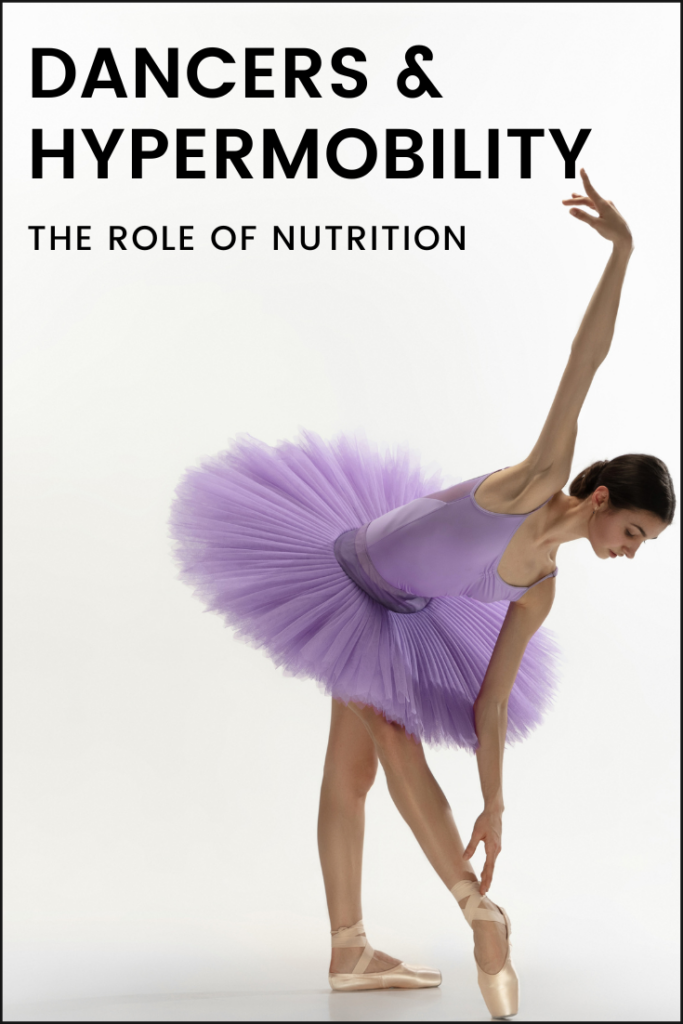
For dancers, hypermobility is a familiar presence in the studio: the ability to move with agility and fold the body into shapes that feel impossible to non-dancers. (Fun fact: my post-college nickname was “flexy.”) But it wasn’t until years later that I understood how hypermobility had quietly challenged my ability to build strength as a dancer. Studying Pilates taught me to optimize my performance in a way that supports rather than exacerbates my hypermobility — and alongside it came a deeper understanding of how nutrition factors into hypermobility disorders, especially a dancer’s elevated risk for disordered eating.
If you’ve ever been called “bendy” or “double-jointed,” this guide covers what every dancer should know about nutrition and hypermobility.
Is Hypermobility the Same as Flexibility?
No, and the distinction matters. Hypermobility involves increased laxity (looseness) of a dancer’s ligaments, while flexibility describes how far muscles can contract and stretch. Both support the skeleton, but they’re two different tissues with two different jobs:
- Muscle is contractile tissue that moves our joints and, ultimately, our bones.
- Ligaments are bands of connective tissue that link bone to bone. They protect our joints, keeping them from moving too far out of range.
Hypermobility in Dance: Limitless or Limited?
Inherited differences in the structure and function of collagen and connective tissue explain the common presentation of hypermobility, including loose joints and stretchy skin. For many dancers, hypermobility feels like an asset, since aesthetic ideals often prize hyperextended lines. There are several subtypes, some less problematic than others; according to the Ehlers-Danlos Society, asymptomatic joint hypermobility that doesn’t cause pain generally doesn’t need to be treated. Problems arise when hypermobility presents alongside joint instability.
Hypermobility spectrum disorder (HSD) describes hypermobility across a spectrum from mild to severe joint involvement. Ehlers-Danlos syndromes (EDS) are a group of more distinguishable disorders, with hypermobile EDS (hEDS) among the most common subtypes. Dancers with hEDS or HSD may also experience a range of multi-organ symptoms that affect their performance potential.
10+ Symptoms That May Present Alongside Hypermobility Disorders
- Joint pain
- Muscle stiffness
- Fatigue
- Dizziness
- Digestive disorders like constipation
- Headaches
- Thin, stretchy skin
- Joint instability and difficulty with coordination
- Increased risk of injury (e.g., sprains)
- Dysautonomia (autonomic nervous system dysfunction)
- Postural tachycardia syndrome (PoTS) and its impact on quality of life
- Neurodivergence, including anxiety, depression, ADHD, and Autism Spectrum Disorder
Because the symptom picture is so broad, many clinicians are under-informed or dismissive, and the “it’s all in your head” response is a common, deeply frustrating experience for dancers seeking help. Dr. Linda Bluestein, an integrative pain medicine physician specializing in hypermobility and hEDS, has built her career supporting dancers with hEDS/HSD, debunking myths, and clarifying challenges like misdiagnosis and symptom invalidation. Her Bendy Bodies podcast is a must-listen.
The Role of Nutrition in Managing Hypermobility Disorders and Ehlers-Danlos Syndrome
While these disorders are rooted in an inheritable predisposition, several factors can exacerbate them. Gastrointestinal symptoms like bloating, IBS, and motility issues like constipation have been associated with hEDS and HSD. Neurodivergence is another common thread that can affect a dancer’s ability to fuel adequately. To go deeper on nutrition concerns and interventions for dancers with hEDS/HSD, I collaborated with fellow dance dietitian and friend Kristin Koskinen.
#1: Gut Health and Eating Disorders
Many dancers face functional digestive disorders — gas, constipation, diarrhea — and for those with hEDS/HSD these can feel amplified. Koskinen agrees that some of the most common struggles among these dancers stem from digestive discomfort. Depending on symptoms, interventions might explore food intolerances, the role of FODMAPs, and intake of probiotic-rich foods.
These interventions belong in the hands of a registered dietitian nutritionist. Roughly 44% of digestive-disorder patients engage in restrictive eating, so dancers with hEDS carry a higher risk for disordered eating — Koskinen notes that many have restricted down to ten or fewer “safe” foods. Working with a dietitian to rebuild a supportive relationship with food and to identify tolerable foods without leaning on elimination diets is essential. Additional resources:
#2: Inflammation and Pain
Hypermobility disorders like EDS are associated with chronic inflammation and pain. Reducing life stressors matters and can be supported alongside a mental health therapist. Certain mealtime additions can help too — but they should be framed within an inclusive approach rather than an exclusive one. Advice to cut out foods (including “processed” ones or refined sugars) can fuel a polarized, “clean”-eating mindset and heighten food anxiety, itself a stressor worth reducing. Here’s how dancers can use anti-inflammatory information without obsession. A few additions to consider:
- Foods rich in omega-3 fatty acids: flax, fatty fish (salmon, tuna), avocado, olive oil.
- Balanced meals and snacks: a mix of carbs, protein, and fat to support blood sugar control.
- Fibrous complex carbohydrates: whole grains, beans, nuts, seeds.
- A broad spectrum of antioxidants from colorful produce: leafy greens, apples, tomatoes, berries, citrus.
An informed fitness professional helps here too — Jennifer Milner is a certified Pilates instructor who specializes in hypermobile dancers.
#3: Food Anxiety and Disordered Eating
Uncertainty about whether specific foods or ingredients affect hEDS symptoms is common, and it can leave dancers with heightened food anxiety and self-doubt at mealtimes. One persistent myth is that intuitive eating is unattainable for those with chronic conditions. In reality, as I discuss here, intuitive eating can enhance interoceptive sensitivity to hunger and fullness and remove obstacles that block choices supporting disease management. With hEDS/HSD dancers, I use gentle nutrition to support symptom management and flexible meal-plan adjustments.
#4: Nutrient Deficiencies
Restrictive eating, chronic fatigue, impaired digestion, and malabsorption can all drive deficiencies in dancers with hEDS and HSD. As Koskinen explains, a dietitian can order and evaluate lab tests alongside a dancer’s primary care provider to assess needs and build a plan — without defaulting immediately to supplements. I echo that food-first approach. For hEDS/HSD dancers, we emphasize injury prevention through foods rich in protein, vitamin C, copper, zinc, and iron — nutrients that also support collagen health.
#5: Symptom Management
Several co-existing conditions can further affect nutrition status and performance. Many fall under the umbrella of neurodivergence — anxiety, depression, ADHD, autism spectrum disorders, and perfectionism — where aversions to certain flavors or textures complicate meeting nutrition needs. PoTS is another common presentation: a malfunction of the autonomic nervous system causing an irregularly fast heartbeat when standing, sometimes with dizziness or fainting. For dancers with PoTS, Koskinen emphasizes electrolytes, particularly salt — adding sodium and chloride to food, or sipping sports drinks before, during, or after class to replenish sweat losses.
Finally, dancers should be wary of blanket food-sensitivity claims and elimination diets. Suspected food intolerances and allergies warrant medical evaluation (e.g., with an allergist), especially if mast cell activation syndrome (MCAS) is suspected.
Hypermobile Dancers: Key Takeaways
Given the confusion and knowledge gaps surrounding hypermobility, dancers benefit enormously from learning about injury prevention and symptom management. Lean on trusted clinicians and build a team — a medical doctor, physical therapist, dietitian, and mental health provider — to support you.
Frequently Asked Questions
- Is hypermobility the same as flexibility? No. Hypermobility refers to increased laxity of the ligaments (the connective tissue linking bone to bone), while flexibility describes how far muscles can stretch and contract. They involve two different tissues with two different functions.
- What is the difference between HSD and Ehlers-Danlos syndrome? Hypermobility spectrum disorder (HSD) describes hypermobility across a spectrum from mild to severe joint involvement. Ehlers-Danlos syndromes (EDS) are a group of more distinguishable disorders, with hypermobile EDS (hEDS) among the most common subtypes.
- What symptoms present alongside hypermobility disorders? Common symptoms include joint pain, muscle stiffness, fatigue, dizziness, digestive issues like constipation, headaches, thin or stretchy skin, joint instability, and a higher injury risk. Dysautonomia, PoTS, and neurodivergence (anxiety, depression, ADHD, autism) can also present.
- Are dancers with hypermobility at higher risk for disordered eating? Yes. Digestive discomfort is common with hEDS/HSD, and about 44% of digestive-disorder patients engage in restrictive eating. Some dancers narrow down to ten or fewer “safe” foods, which is why dietitian support is important.
- How does nutrition help manage hypermobility and hEDS? Nutrition supports symptom management across gut health, inflammation, food anxiety, nutrient deficiencies, and co-existing conditions like PoTS. The emphasis is on an inclusive, food-first approach guided by a registered dietitian rather than restriction.
- What foods help reduce inflammation for hypermobile dancers? Consider omega-3-rich foods (flax, fatty fish, avocado, olive oil), balanced meals with carbs, protein, and fat, fibrous complex carbohydrates, and antioxidant-rich colorful produce. These are framed as additions, not restrictions.
- Which nutrients support collagen and injury prevention? Protein, vitamin C, copper, zinc, and iron all play a role in collagen health and injury prevention. A food-first approach is preferred before turning to supplements, ideally guided by lab evaluation.
- What should dancers with PoTS eat? Dancers with PoTS benefit from a focus on electrolytes, particularly sodium and chloride. Adding salt to food or sipping sports drinks before, during, or after class can help replenish losses from sweat.