Are Genetically Modified Foods Safe?
If you’ve ever noticed a “Non-GMO” label on a package at the grocery store, you’ve probably wondered what it actually means. For dancers, who are often encouraged to eat as “clean” as possible, labels like these can create unnecessary confusion and anxiety.
The reality is that many foods we eat contain ingredients from genetically modified crops, yet decades of research have consistently shown these foods to be safe. Let’s take a closer look at what GMOs are, how they’re regulated, and what they really mean for your health and performance.
What are GMOs?
GMO stands for genetically modified organism. These are plants or animals whose DNA has been altered using modern biotechnology to introduce specific traits. Scientists may modify crops to improve resistance to insects or disease, tolerate drought, reduce food waste, or enhance other agricultural characteristics.
Although genetic engineering sounds like a modern invention, humans have been changing the genetics of crops for thousands of years through selective breeding. Today’s biotechnology simply allows scientists to make these changes with much greater precision.
In the United States, only a small number of genetically engineered crops are grown commercially. Common examples include:
- Corn (used in flour, starch, syrup, meal, and animal feed)
- Soybeans
- Sugar beets
- Canola
- Cotton
- Some varieties of apples
- Summer squash
- Papaya
- Farm-raised salmon
Many packaged foods contain ingredients derived from these crops, including corn starch, soy lecithin, soybean oil, canola oil, and beet sugar.
Genetic Engineering vs. Traditional Breeding
One of the biggest sources of confusion is that not all genetic modification is the same.
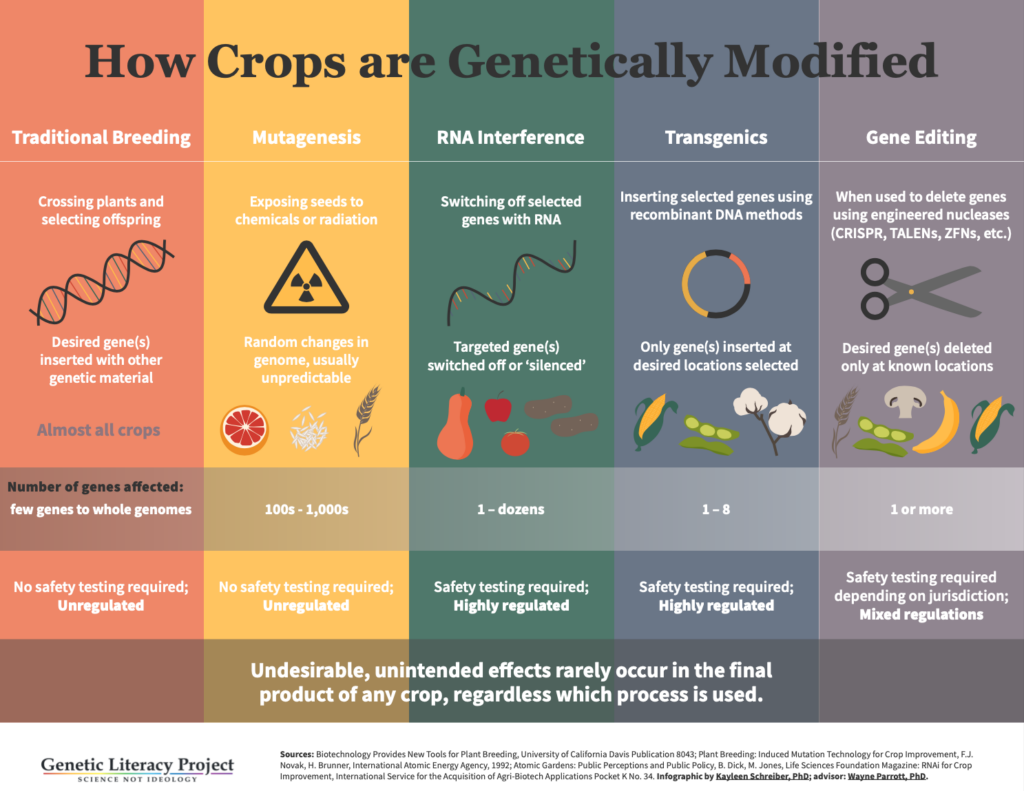
Traditional breeding, which has been used for centuries, changes a plant’s genetics by selecting desirable traits over multiple generations. This technique (depicted below in red) is used in almost all crops (even those labeled as “non-GMO”). Though largely unregulated, traditional breeding is still considered safe— it’s just misleading because even organic foods can be genetically modified in this way.
Transgenics (below, in blue) is a highly regulated technique responsible for most of the GMOs in today’s food supply. All transgenic crops are considered genetically modified, but not all genetically modified foods are considered transgenic. Understanding this distinction helps explain why labels like “Non-GMO” don’t necessarily mean a food hasn’t had its genetics influenced through breeding. Here’s an article that describes the process of genetic engineering.
Are GMOs Safe?
The short answer is yes. The overwhelming scientific consensus is that foods currently approved through biotechnology are just as safe to eat as their conventionally bred counterparts.
Organizations supporting this conclusion include:
- The World Health Organization (WHO)
- The National Academy of Sciences
- The American Medical Association
- The American Association for the Advancement of Science
- The FDA
- The USDA
The consensus? “GM crops have no more risk than those that have been developed by conventional breeding techniques.”
Developing a new genetically engineered crop often takes well over a decade of research, testing, and regulatory review. Scientists evaluate factors such as:
- Potential allergens
- Nutritional composition
- Toxicity
- Digestibility
- Environmental impact
In the United States:
- The FDA evaluates food safety.
- The USDA oversees agricultural safety.
- The EPA regulates genetically engineered crops with pesticidal properties.
Why Do Farmers Use GMOs?
Farmers adopt genetically engineered crops for many reasons. Depending on the crop and growing conditions, they can help:
- Reduce crop losses from insects and disease
- Improve drought tolerance
- Increase crop yields
- Reduce food waste
- Use resources (land, water) and certain pesticides more efficiently
- Help with food insecurity
These benefits can contribute to greater food availability and help support food production for a growing global population. To learn more about the environmental benefits of GMO crops, click here.
What About “Non-GMO” Labels?
Since 2022, many foods in the United States that contain genetically engineered ingredients are required to follow the National Bioengineered Food Disclosure Standard, which uses the term “bioengineered.”
You’ll also see products voluntarily labeled “Non-GMO,” often used as a marketing choice to give foods a competitive edge.
These labels are primarily marketing claims. While some consumers associate “Non-GMO” with being healthier or more nutritious, research has not found meaningful nutritional differences between GMO and non-GMO versions of the same food.
It’s also worth noting that some genetic engineering techniques (traditional breeding and mutagenesis) are, from a labeling perspective, not considered “GMOs.” As mentioned earlier, foods that include ingredients that have been modified using techniques like traditional breeding and mutagenesis are not as regulated, and even crops certified as “organic” can use them. The bottom line? Choosing foods solely based on this label is unlikely to improve your health (but can strain your wallet!)
Why Do Some Countries Restrict GMO Crops?
Some countries, particularly in Europe, have stricter regulations on growing genetically engineered crops.
These policies reflect a combination of regulatory approaches, political decisions, consumer preferences, and public attitudes toward biotechnology (pressure from activists). At the same time, many of these countries continue to import genetically engineered crops, particularly for animal feed and food production.
This highlights how interconnected the global food system has become. Here’s a great article to learn more about why GMO production is limited in some nations.
What Dancers Need to Know
For dancers, the takeaway is simple.
Whether a food contains genetically engineered ingredients or not tells you very little about its nutritional value. A wholesome breakfast cereal made with genetically engineered corn can absolutely fit into a performance-supporting eating pattern. Likewise, a food labeled “Non-GMO” isn’t automatically healthier. Research consistently shows no higher health risk from GMOs compared to conventional foods. The World Health Organization also concludes that no negative health implications have resulted from the consumption of GMOs in the countries where they have been approved.
Instead of focusing on labels that create unnecessary food rules, prioritize habits that truly support performance:
- Eat enough throughout the day.
- Include carbohydrates, protein, and healthy fats.
- Eat plenty of fruits and vegetables.
- Choose foods you enjoy and can consistently afford.
At the end of the day, your body benefits far more from eating enough and eating consistently than from worrying about whether a food contains genetically engineered ingredients.
Nutrition doesn’t have to be fear based. When we understand the science, we can make food choices with confidence instead of confusion.
Related Readings: