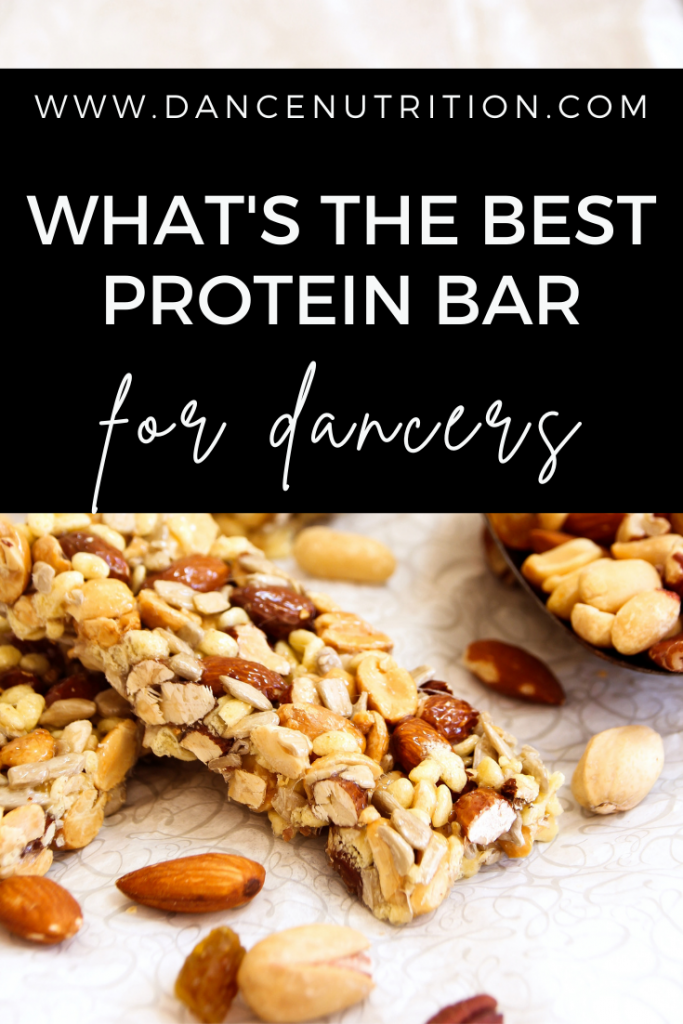
Protein bars can be an incredibly convenient tool for dancers, especially during long rehearsal days, back-to-back classes, or performances when time and access to food are limited. They offer a quick way to replenish energy and optimize that crucial post-dance recovery window. Protein bars can also serve as an easy pre-class snack when you need something that’s portable, predictable, and easy to digest.
But here’s the key: a protein bar should never replace full meals or make up the majority of your snacks. One bar per day can fit comfortably into most dancers’ routines. Two may be appropriate on especially packed days when planning or prepping additional snacks wasn’t possible. The goal is to use bars strategically— not as the backbone of your fueling plan, but as a supportive tool in it.
I’ve written previously about the role of protein in a dancer’s diet and how to evaluate snack bars in general. But dancers often ask the specific question: What about protein bars? How do I choose the best one for my training? Let’s break it down.
What Makes a Great Protein Bar for Dancers?
Convenience is usually the top priority— your schedule is full, mealtimes are unpredictable, and you might be commuting or traveling. Once convenience is met, nutrition quality becomes the next differentiator. The right protein bar supports energy, recovery, and satisfaction without weighing you down or causing stomach upset.
A balanced dancer meal plan includes carbohydrates, fat, protein, and flavor, so your protein bar should reflect that balance, too. Here’s what to look for:
1. Carbohydrates for Energy
Carbs are a dancer’s preferred fuel source, and a good protein bar should include them. Look for:
- Whole grains: oats, wheat, quinoa
- Fruit-based binders: dates, raisins, dried banana
- Natural sugars: honey, maple syrup
These quick-acting carbohydrates help replenish glycogen, boost energy, stimulate insulin (which aids protein uptake), and support muscle recovery.
Red flag: Bars marketed as “low carb” or “keto.” These often fall short for dancers who need reliable, sustained fuel.
2. Fat for Satisfaction and Recovery
Consider the fat incorporated into the bar. Nuts, seeds, and nut butter balance are rich in essential fatty acids like omega-3s. Not only do fats promote satisfaction, but these unsaturated fats help to alleviate inflammation after intense dancing.
Fat helps keep you satisfied longer and supports hormonal balance, cognitive function, and inflammation reduction. Look for:
- Nuts (almonds, cashews, peanuts)
- Seeds (chia, flax, pumpkin)
- Nut butters
These provide heart-healthy unsaturated fats and omega-3s that help manage inflammation after intense dancing.
3. Protein for Repair (But Not Too Much)
Protein supports muscle repair and recovery. You can learn more about the role of protein supplements in a dancer’s diet here. Many bars include added protein sources such as:
- Whey
- Soy isolate
- Egg white protein
- Pea or brown rice protein
These can be helpful, but more isn’t always better. Very high-protein bars (25+ grams) may cause GI discomfort, lead to over-fullness, or contribute to dehydration if a dancer isn’t hydrating well.
Target range: 10–20 grams per bar. Enough to support recovery, but balanced with carbs and fats.
Additional Tips When Choosing a Dancer-Friendly Protein Bar
Avoid digestive disruptors: Bars labeled “low sugar,” “low calorie,” “paleo,” or “keto” often rely on:
- Artificial sweeteners
- Sugar alcohols (erythritol, xylitol, maltitol)
- Synthetic fibers (inulin, chicory root)
These ingredients commonly lead to bloating, cramping, and gas— not ideal before grand allegro.
Flavor matters: Spices like cinnamon, cocoa powder, and vanilla extract add flavor without extra additives. They also make eating your bar something you actually enjoy, not just tolerate.
Real-food ingredients = predictable digestion: Bars made with recognizable ingredients (nuts, fruit, oats) tend to digest more smoothly and feel better mid-rehearsal.
My Favorite Dancer-Friendly Protein Bars
My personal go-to? LÄRABAR! Simple ingredients, easy to digest, and delicious options rooted in dates and nuts. For a full list of TTP-approved bar options with detailed notes on nutrition, ingredients, and use-cases (pre-class vs. post-class), check out this article.