A dancer’s demanding schedule presents challenges that extend far beyond what happens inside the studio. Relative Energy Deficiency in Sport, or RED-S, is a condition that remains widespread throughout the dance industry. RED-S develops as a result of low energy availability. Because calories are the body’s primary source of energy, low energy availability occurs when there is not enough fuel to support both physical activity, such as training and rehearsals, and essential metabolic functions.
What Is RED-S and What Happens When a Dancer Develops It?
The term RED-S (Relative Energy Deficiency in Sport) was introduced in 2014 following an updated international consensus on athlete health. Before this, the Female Athlete Triad was commonly used to describe the relationship between inadequate energy intake, menstrual dysfunction, and poor bone health. Here’s an update.
When a dancer consistently under-fuels and or trains excessively, the body adapts by altering hormone production. These hormonal changes compromise bone strength, leaving bones less able to tolerate the physical demands of dance. As a result, injuries such as stress fractures become more likely.
How RED-S Impacts Dancer Health
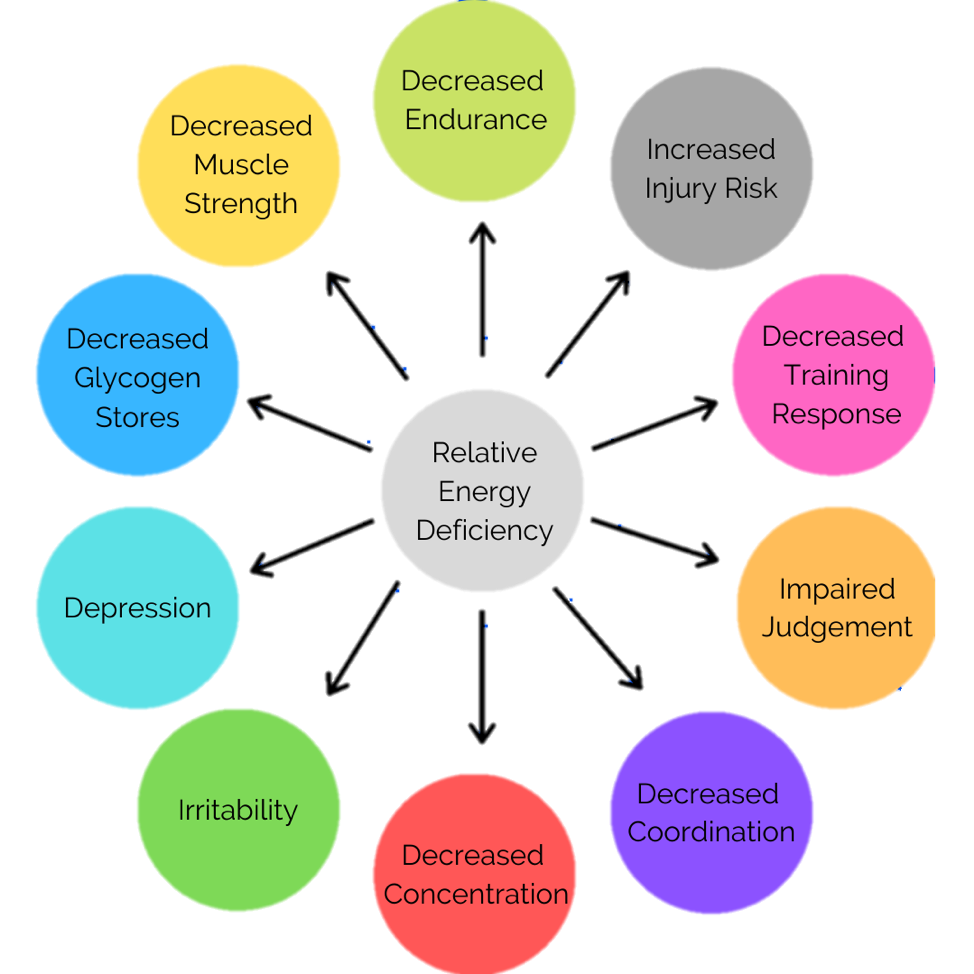
Relative Energy Deficiency in Sport affects multiple systems throughout the body. Health consequences associated with low energy availability may include:
- Appetite dysregulation
- Impaired digestion
- Reduced bone density and bone strength
- Difficulty with focus and concentration
- Compromised blood health
- Sleep disturbances
- Weakened immune function
- Impaired cardiovascular health
- Fertility disruptions
- Increased risk of bone injuries
How RED-S Impacts Dancer Performance
These physiological disruptions directly interfere with a dancer’s ability to train and perform at their best. Common performance-related consequences include:
- Slower muscle recovery
- Reduced concentration and mental clarity
- Chronic fatigue
- Irritability and mood changes
- Symptoms of depression
- Loss of muscle strength
- Decreased coordination
- Blunted training adaptations
- Low motivation
- Increased risk of burnout
Amenorrhea in Dancers
Menstrual irregularities remain a key clinical indicator of RED-S. According to the Royal College of Obstetricians and Gynaecologists, primary amenorrhea refers to the absence of menstruation by age 16. Secondary amenorrhea is defined as the loss of an established menstrual cycle for six or more months, or three or more months in individuals with previously regular cycles.
While many factors can influence menstrual health, functional hypothalamic [secondary] amenorrhea, or FHA, is commonly seen in dancers experiencing chronic energy imbalance. FHA and other menstrual disruptions are red flags for Relative Energy Deficiency in Sport and warrant evaluation by both a medical doctor and a Registered Dietitian Nutritionist.
To understand why this occurs, consider the body’s priorities. Even when fatigue is high, the body can continue to push through intense training demands. To conserve energy for survival, it reduces energy allocation to processes considered nonessential in the short term, including reproduction and hormone production. As estrogen and testosterone decline, bone formation is compromised, placing bone health at risk.
Do Male Dancers Need to Worry About RED-S?
Yes. RED-S affects all dancers regardless of sex. Hormonal disruptions caused by low energy availability can impair health and performance in male dancers as well. In fact, the absence of menstruation as a visible warning sign may allow RED-S to go undetected for longer periods in male dancers. For this reason, early screening and evaluation by a qualified clinician, particularly a Registered Dietitian Nutritionist with experience in dance, is strongly recommended.
Why Are Dancers at Higher Risk for RED-S?
Low calorie diets combined with demanding training schedules are a major contributor to energy deficiency. Simply put, when food intake does not meet the physical demands of dance, the risk of RED-S increases.
Although the dance industry continues to evolve, many dancers are still exposed to outdated body ideals that prioritize thinness over health and performance. Compared to the general population, dancers are more likely to pursue weight loss and restrictive eating behaviors. Research consistently shows that dancers are up to three times more likely to develop eating disorders, with even higher risk among ballet dancers.
The encouraging news is that RED-S is preventable. With appropriate education, support, and fueling strategies, dancers can protect both their physical and mental health while enhancing performance.
Low-calorie diets are one culprit for the energy shortage, along with those demanding dance schedules. Simply put, if you’re not fueling your body with enough food, then you’re at risk for developing RED-S.
How Can Dancers Reduce Their Risk of RED-S?
#1: Eat Enough
A dancer’s nutrition plan should emphasize consistency, variety, and adequacy. Aim for at least three meals and two snacks each day, spaced throughout the morning, afternoon, and evening. When time between classes and rehearsals is limited, portable options such as snack bars, fruit, trail mix, or yogurt can help bridge energy gaps. Adequate fueling is not optional. It is foundational to strength, stamina, and artistic expression.
#2: Prioritize Rest
Rest is a critical component of training, not a luxury. Consider whether your schedule allows for sufficient recovery and whether you are sleeping at least seven to eight hours per night. The CDC recommends eight to ten hours of sleep for teens and at least seven hours per night for adults. Adequate rest supports muscle repair, reduces injury risk, and improves focus and emotional regulation. To learn more about the role of sleep in a dancer’s performance, read this article.
#3: Seek Support from Licensed Professionals
Working with a Registered Dietitian Nutritionist who understands the demands of dance can be transformative. Nutrition care should address not only meal and snack planning but also the unlearning of restrictive diet culture that is deeply ingrained in the dance world. Collaboration with a mental health therapist can further support dancers in challenging unhelpful beliefs about food, body image, and performance.
Protecting your energy availability protects your career. Fueling adequately, resting intentionally, and seeking professional support are essential steps toward long-term health and sustainable performance.